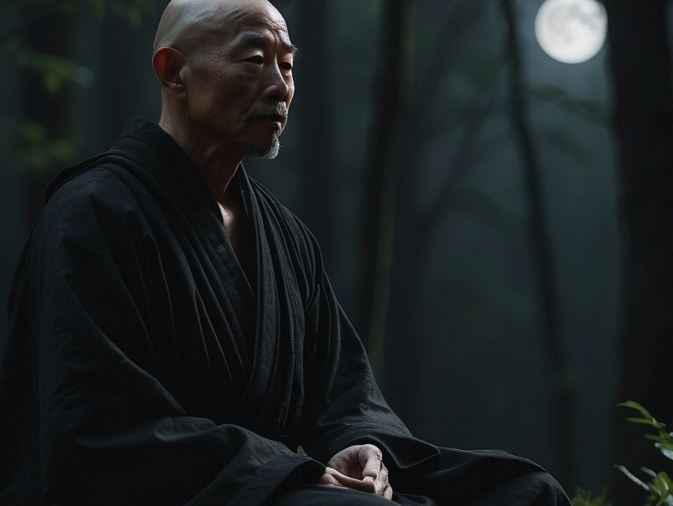
About Master Hughes
A.S, B.S,M.S,CTR,RE,TTAC
Zen Master Hughes has indeed been formally recognized by the
Texas House of Representatives for his humanitarian work,
advocacy, and leadership in the state—particularly during the years
2005 and 2007. The legislature honored him as an esteemed
advocate and acknowledged his significant contributions to rural
development, anti-violence training, and community service
throughout Texas. He has extensive credentials and activity spanding
over 3 generations.
Details of Recognition
In 2005 and 2007, Hughes was honored in the Texas legislature,
marking him as the first Buddhist master to receive such recognition
in Texas.
Commendations came from state officials, including
acknowledgments by Governor Rick Perry’s office, State
Representative Chuck Hopson, Congressman Jeb Hensarling, and
Senator John Cornyn for his humanitarian work and involvement in
community-based causes.
The recognition from the Texas House is further validated by
widespread media coverage, organizational records, and various
public articles documenting these legislative honors and the impact
of Hughes’ programs.
These honors demonstrate the breadth and depth of Zen Master
Hughes’ contributions and his unique status as a leader who brought
Buddhist principles into public service within Texas.1. Founding and
Leading the National Meditation Center
Master Hughes established the Dainoshin Ji (National Meditation
Center for World Peace) in Jacksonville, Texas, which became a
central hub for teaching mindfulness, meditation, and trauma
recovery for over 20 years. This center not only provided traditional
Zen instruction but also served as a community resource, bridging
spiritual practice with real-world challenges.
2. Practical, Action-Oriented Approach to Zen
Hughes is recognized for his unique, practical approach to Zen,
emphasizing mindfulness and compassion as tools for daily
living—not just as abstract principles or meditation techniques. He
teaches that spiritual growth must be reflected in action, advocating
for "engaged Buddhism," where practitioners use their awareness to
create tangible positive change in their communities.
3. Humanitarian and Community Service
A hallmark of Hughes’s legacy is his extensive humanitarian work.
He has worked directly with troubled youth, law enforcement, and
trauma victims, developing anti-violence and trauma recovery
programs that integrate Zen principles. His expertise in trauma
response and his willingness to engage with marginalized and at-risk
populations have earned him commendations from state and federal
agencies, including the Texas Legislature and the U.S. Department of
Justice.
4. Influence Beyond the Temple
Master Hughes’s teachings have reached thousands, including
government officials, law enforcement, and crisis center workers,
whom he has trained in mindfulness, security, and trauma response.
His impact extends internationally, with Buddhists from as far as
India seeking his guidance.
5. Integration of Martial Arts and Zen
A skilled martial artist, Hughes incorporates martial arts into his Zen
teachings, using them as a vehicle for developing intuition, self-
mastery, and non-violence. This integration reinforces his philosophy
that true power lies in adaptability and understanding rather than
physical strength.
6. Recognition and Legacy
Master Hughes is widely regarded as one of the most commendated
Buddhist masters in the United States, especially in Texas, and is
respected for his humility and dedication. He was the first Buddhist
master to be recognized in northeast Texas and has been featured in
various media outlets for his pioneering work.
7. Philosophy: Action Over Opinion
He is known for prioritizing action over opinion, making Zen
relevant to contemporary issues and accessible to a broad audience.
His teachings underscore that mindfulness and compassion must be
lived and expressed through concrete acts of service and
engagement.
In summary, Master Hughes is a significant figure in American Zen
Buddhism because he has successfully merged traditional Zen
teachings with practical, community-focused action, leaving a lasting
impact on both spiritual seekers and the broader society.
Why is Master Hughes
considered a significant figure in
American Zen Buddhism
Zen Master Hughes remains a quietly influential
figure, continuing his retreat while his legacy
grows through digital and community channels.
Here’s the latest on Zen Master Hughes:
• Spiritual Presence: Though in retreat for many
years, Zen Master Hughes continues to be
recognized for his deep commitment to engaged
Buddhism, emphasizing compassionate action
over passive belief. His Buddhist name, Shinkai-
kosei (“Deep Ocean”), reflects his depth of
wisdom and compassion.
• Digital Footprint: His YouTube channels—Master
Hughes and Zen in the Woods—remain active
archives of his teachings and reflections. These
include meditative videos, philosophical musings,
and glimpses into his solitary Zen practice.
• Legacy of the Dainoshin Ji Temple: Hughes
previously operated the Dainoshin Ji Temple in
Texas for over 20 years. It was a 501(c)(3) nonprofit
and served as a hub for Zen practice and
humanitarian outreach.
• Public Curiosity: Recent articles have imagined
hypothetical encounters between Zen Master
Hughes and figures like Elon Musk, highlighting
the contrast between technological ambition and
spiritual stillness. While fictional, these musings
reflect a growing cultural curiosity about Hughes’
teachings and worldview.

























































































































123 Portobello Road England GB 98765
© T. H. E. HOTEL